Understanding Proper Kitchen Layout: The Importance of Counter Space and Appliance Placement

Designing a functional and safe kitchen goes beyond aesthetics. Proper spacing between appliances and work zones is essential to create a layout that is efficient, safe, and comfortable to use. This illustrated guide explains the common mistakes and correct practices when planning a straight-line (single wall) kitchen layout.

October 23, 2025
Understanding Proper Kitchen Layout: The Importance of Counter Space and Appliance Placement

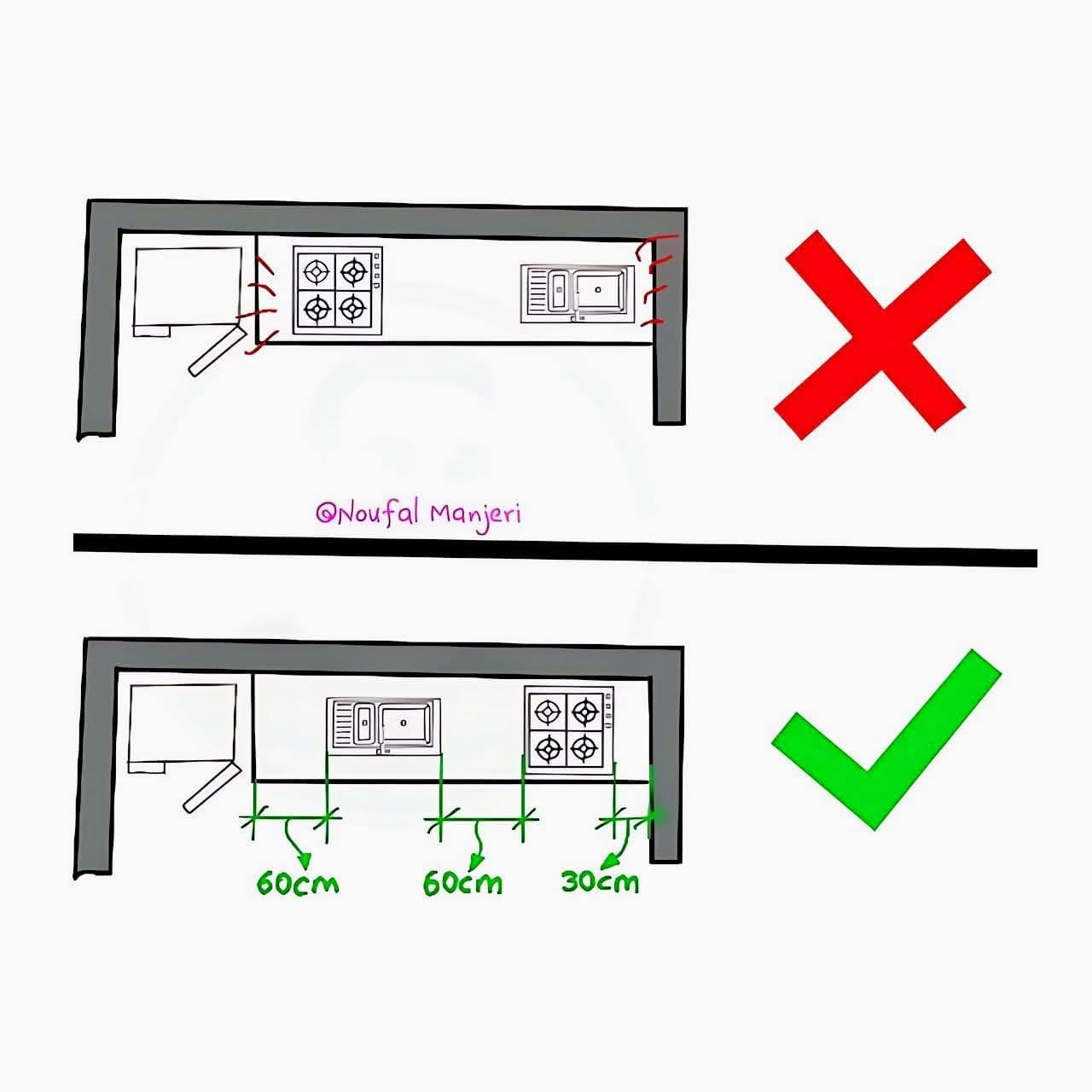
Incorrect Kitchen Layout (Red X)

The first diagram highlights an example of poor design, marked with a red X.

  • Cooktop Placement: The cooktop is positioned too close to the wall. The red lines indicate a heat hazard, as high temperatures from the stove can damage nearby walls or finishes and create a safety risk.
  • Microwave or Oven Placement: The same issue occurs on the other end where an appliance is placed right against the wall, leaving no room for airflow or safe handling.
  • Sink and Work Zone: The sink sits between two heating elements, leaving no proper prep or landing area. This arrangement restricts movement and disrupts workflow, making it harder and less safe to prepare meals.

Correct Kitchen Layout (Green Checkmark)

The second diagram, marked with a green checkmark, demonstrates the ideal configuration. This layout follows modern kitchen design principles, ensuring both safety and usability.

Key Dimensions and Clearances

To achieve optimal spacing, the following minimum counter dimensions are recommended:

  1. Prep Space (Sink to Cooktop): 60 cm
    This distance allows for comfortable food preparation between washing and cooking. It acts as a main work surface for cutting, mixing, and setting ingredients.
  2. Landing Space (Sink to Refrigerator or Wall): 60 cm
    This provides an area for placing items taken from the refrigerator or for drying dishes. It also keeps the sink from feeling crowded.
  3. Safety Clearance (Cooktop to Wall): 30 cm
    Maintaining this gap prevents heat damage, allows room for pan handles, and ensures safe maneuvering around the cooking area.

Summary of Best Practices

A well-planned kitchen layout should always prioritize:

  • Safety: Keep at least 30 cm clearance from any wall near the cooktop.
  • Functionality: Ensure a minimum of 60 cm workspace between the sink and cooktop for preparation and landing.
  • Workflow: Arrange elements in a logical sequence such as Refrigerator → Prep Zone → Sink → Prep Zone → Cooktop.

A functional kitchen layout is not just about design; it defines the efficiency, comfort, and safety of daily cooking activities. These small but essential adjustments can greatly improve the usability and flow of any kitchen space.

Enjoyed this article?

Subscribe to our newsletter to get more insights about architecture, engineering, and technology.